O que você vai ver por aqui? Uma designer de moda, estudante de nutrição e o que mais eu desejar, falando sobre moda, beleza, saúde, autoestima e comportamento, sempre pela sua própria ótica. Assuntos escolhidos no momento, sem ordem fixa, mas com intensidade, leveza e inspiração.
Saúde e Nutrição????? (Ué, o que que isso tem a ver com Moda? Tem sim, você vai entender!)
🇺🇸 ENGLISH VERSION
What will you find here? A fashion designer, nutrition student, and future psychologist sharing thoughts on fashion, beauty, health, self-esteem, and behavior — always from her own perspective. Topics are chosen in the moment, with no fixed order, but always with intensity, lightness, and inspiration.
Health and Nutrition????? (Huh, what does that have to do with Fashion? It does, you’ll see!)
“Você acha que eu devo continuar performando mesmo não estando bem?”
Eu responderia em três segundos:
Não, mulher. Se respeita. Ouve teu corpo. Hoje é só mais um dia.
Inclusive eu falaria com aquele tom de maturidade quase terapêutica. Postaria até um story sobre autocuidado depois.
Agora… quando sou eu?
Eu viro uma CEO da performance. Uma gerente de metas. Uma fiscal da proteína.
Porque aparentemente, na minha cabeça, ter gastrite não é motivo suficiente para descansar. É quase uma afronta ao planejamento semanal.
Eu sei. É ridículo.
Eu entendo fisiologia. Eu sei que inflamação precisa de repouso. Eu sei que estresse piora o quadro. Eu sei que um dia sem treino não destrói constância nenhuma.
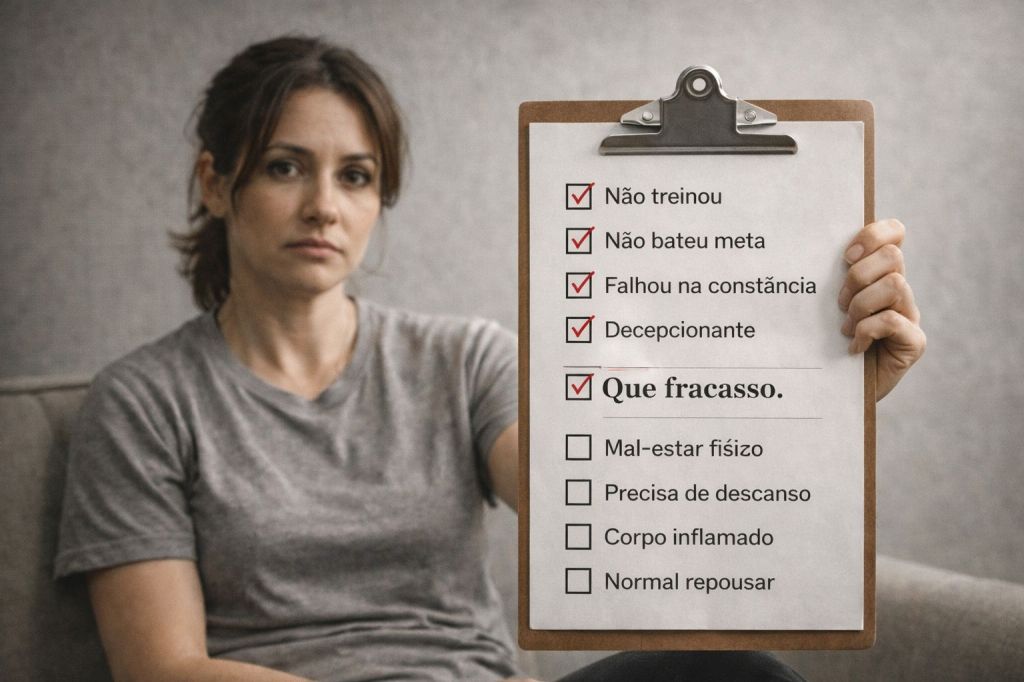
Mas existe uma parte de mim que age como se eu tivesse perdido um campeonato olímpico invisível.
E o mais curioso?
Para algumas besteiras que eu faço na vida, eu passo pano com uma elegância impressionante. Arrumo justificativa, contexto, argumento histórico, mapa astral se precisar.
“Ah, mas veja bem…” “Não era bem assim…” “Também não foi tão grave…”
Agora experimenta eu falhar numa meta que eu mesma criei.
Aí não tem pano. Tem tribunal.
É curioso como a régua muda dependendo do assunto.
Em algumas áreas, eu sou indulgente. Em outras, eu viro carrasca.
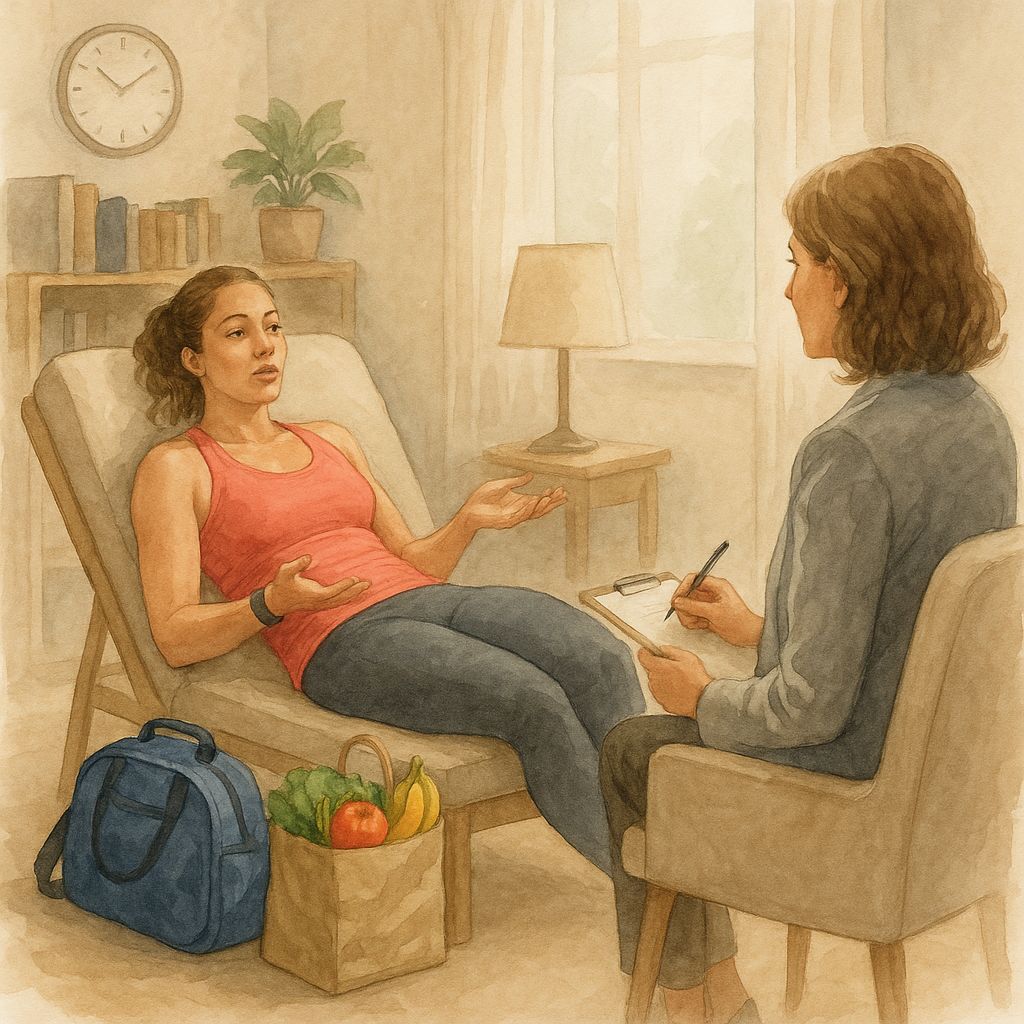
Ontem uma amiga comentou que a psicóloga dela faz uma pergunta ótima:
“Qual é a consequência grave disso?”
Então vamos lá.
Qual é a consequência grave de não treinar hoje? Qual é a tragédia nacional de não bater a meta de proteína?
Nenhuma.
O mundo segue girando. Minha massa muscular não evapora em 24 horas. Minha disciplina não pede demissão.
Mas a minha cabeça, dramática, adora transformar pausa em fracasso.
Disciplina é constância com inteligência. Autocobrança é constância com chicote.
E talvez maturidade não seja sobre nunca falhar — seja sobre parar de se punir por ser humana.
Com 45 anos, eu sigo treinando. Mas o treino mais difícil não é o da academia.
É aprender a ser minha própria aliada.
Constância não é nunca parar. É saber quando parar para continuar.
E talvez eu não precise de mais disciplina. Talvez eu precise de menos julgamento.
Consistency Is Not About Never Stopping
If a friend asked me:
“Do you think I should keep performing even when I’m not feeling well?”
I would answer in three seconds:
No, woman. Respect yourself. Listen to your body. Today is just one more day.
I would even say it in that almost-therapeutic mature tone. I’d probably post a self-care story about it afterward.
Now… when it’s me?
I turn into a performance CEO. A goal manager. A protein inspector.
Because apparently, in my head, having gastritis is not a good enough reason to rest. It’s practically an offense to the weekly plan.
I know. It’s ridiculous.
I understand physiology. I know inflammation needs rest. I know stress makes it worse. I know one day without training does not destroy consistency.
But there’s a part of me that acts as if I’ve lost an invisible Olympic championship.
And the most curious part?
For some nonsense I do in life, I cover it up with impressive elegance. I find justification, context, historical arguments, even an astrological chart if necessary.
“Oh, but you see…” “It wasn’t exactly like that…” “It wasn’t that serious…”
Now try watching me miss a goal I created myself.
There’s no cover-up then. There’s a trial.
It’s curious how the standard changes depending on the subject.
In some areas, I’m indulgent. In others, I become my own executioner.
Yesterday a friend mentioned that her psychologist asks a great question:
“What is the serious consequence of this?”
So let’s go there.
What is the serious consequence of not training today? What is the national tragedy of not hitting my protein target?
None.
The world keeps spinning. My muscle mass does not evaporate in 24 hours. My discipline does not resign.
But my dramatic mind loves to turn pause into failure.
Discipline is consistency with intelligence. Self-judgment is consistency with a whip.
And maybe maturity isn’t about never failing — maybe it’s about stopping punishing yourself for being human.
At 45, I’m still training. But the hardest workout isn’t at the gym.
It’s learning to be my own ally.
Consistency is not about never stopping. It’s knowing when to stop in order to continue.
And maybe I don’t need more discipline. Maybe I need less judgment.
Eu comecei esse texto pensando em outra coisa. Me distraí. Perdi a ideia inicial. Mas talvez isso diga mais sobre o assunto do que qualquer planejamento.
A tecnologia evoluiu. Novas ferramentas surgiram. Novas oportunidades apareceram.
Mas os comportamentos continuam velhos. E os erros, exatamente os mesmos.
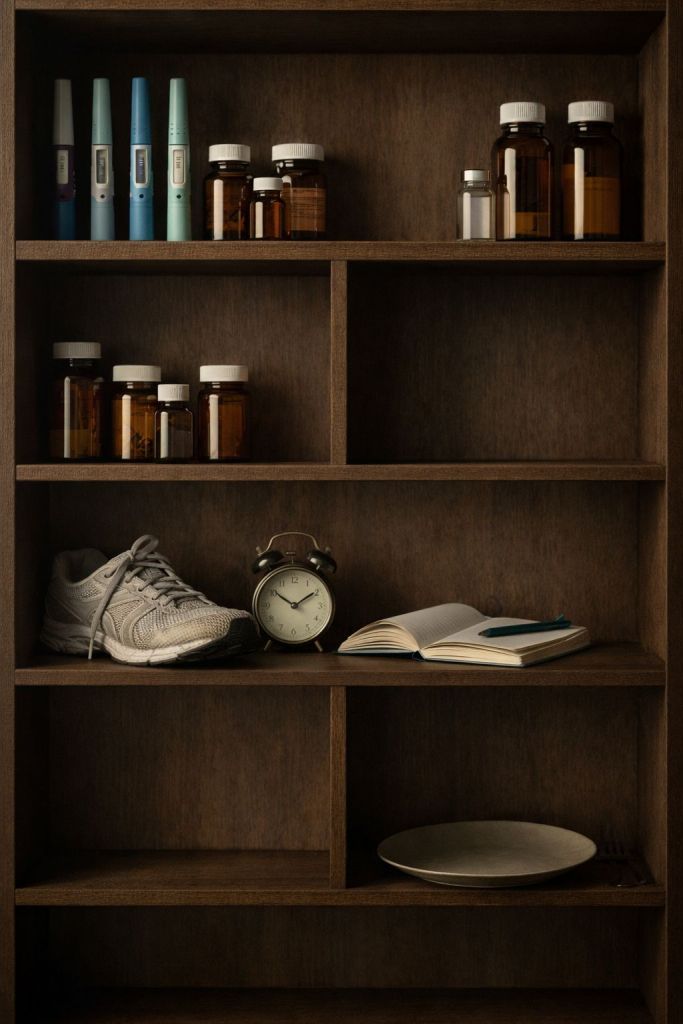
Hoje temos pílulas, fórmulas, protocolos, canetas. Ferramentas brilhantes, mais modernas, que agem em outros lugares, com muito menos efeitos colaterais. A ciência avançou — e avançou muito.
O problema é que essas ferramentas novas estão sendo usadas com a mesma mentalidade antiga.
As pessoas querem colher sem preparar o terreno. Querem o bônus sem aceitar o ônus. Querem acreditar que existe fórmula mágica, atalho, milagre.
E não existe.
Toda evolução tecnológica no emagrecimento só existe para uma coisa: criar uma janela de oportunidade para que a pessoa faça aquilo que ela sempre precisou fazer — e nunca mudou.
Alimentação. Estilo de vida. Atividade física. Sono. Nutrição do corpo acima da vontade.
As premissas não mudaram. E não vão mudar, apareça o que aparecer.
O que eu vejo hoje são pessoas usando canetas emagrecedoras e não fazendo o que precisa ser feito. E isso não é novo.
Isso vem da época de medicações antigas como fenproporex, clordiazepóxido e inibidores de apetite. Não no mecanismo de ação — isso evoluiu muito — mas na finalidade.
A grosso modo, a finalidade sempre foi a mesma: te ajudar a criar hábito, se doutrinar, mudar o estilo de vida.
Mas os erros continuam se repetindo.
“Se eu estou sem fome, eu não como.” Quem paga essa conta? O músculo. A saúde. O metabolismo.
O foco virou quantidade de caloria, não quantidade de nutriente. Virou comemorar ficar o dia inteiro sem comer, não comemorar conseguir fazer o que antes não conseguia.
Pessoas emagrecem 20, 30 quilos em pouquíssimo tempo e comemoram, sem entender que isso não é sustentável. Sem entender que o custo desse emagrecimento rápido é alto.
A medicação não tira a fome para você não comer. Ela tira a fissura para que você possa reaprender a comer.
Comer o que precisa. Na hora que precisa. Na quantidade que precisa. Não o que quer.
A gente não deveria comer porque deseja. A gente deveria comer porque é necessário para o corpo funcionar.
Mas a alimentação virou socialização, vício, moeda de troca da indústria. E eu até compreendo — ninguém escolheu isso conscientemente. Muita gente foi inserida nesse contexto.
O que eu não compreendo é a mentalidade que não muda.
As pessoas não estudam. Não leem. Não buscam entender o próprio organismo. E seguem repetindo os mesmos erros, esperando resultados diferentes.
E eu olho e penso: qual a dificuldade de entender que toda evolução tecnológica no emagrecimento só existe para que você faça aquilo que nunca muda?
Foco real na alimentação. Atividade física. Nutrição adequada. Sono. Redução de inflamação. Estilo de vida.
A equação é a mesma. As ferramentas mudam. A mentalidade, não.
Hoje a comemoração não é: “eu estou conseguindo evoluir em mim mesma”.
É: “eu não tive fome e não comi o dia inteiro”.
Isso não é vitória. Isso é ignorância nutricional.
E eu falo isso fazendo uso. Já fiz uso de praticamente todas as medicações para emagrecimento até aqui. Hoje faço uso de caneta emagrecedora.
Em outro momento, eu falo da minha rotina, do que eu perdi, do que eu não abro mão, do quão difícil é. Mas uma coisa é fato.
O ônus existe. Não existe facilidade sem custo. Não existe fórmula mágica.
O bônus só vem quando você aceita, encara e vence o ônus.
E o ônus é sacrifício. Constância. Comprometimento. Disciplina. Fazer o que deve ser feito, não o que se quer.
A obesidade é uma doença. Ela tem CID. Ela é séria. Emagrecer não é fácil.
Mas se você não estiver disposto a se reeducar — mesmo com as melhores ferramentas que a ciência pode oferecer — você vai passar a vida inteira esperando a próxima caneta, a próxima solução, a próxima promessa.
Esperando algo externo resolver aquilo que só pode ser construído internamente.
E eu não estou falando de força de vontade. Estou falando do único caminho possível. Sólido. Real.
Technology evolves. Mentality often doesn’t.
Technology evolves. Mentality often doesn’t.
I started this text thinking about something else. I got distracted. I lost the original idea. But maybe that says more about the subject than any planning ever could.
Technology has evolved. New tools have emerged. New opportunities have appeared.
But behavior remains old. And the mistakes are exactly the same.
Today we have pills, formulas, protocols, injections. Brilliant tools, more advanced, acting in different pathways, with far fewer side effects. Science has advanced — enormously.
The problem is that these new tools are being used with the same old mindset.
People want to harvest without preparing the soil. They want the reward without accepting the cost. They want to believe in magic formulas, shortcuts, miracles.
There are none.
Every technological advancement in weight loss exists for one reason only: to create a window of opportunity for people to do what they have always needed to do — and what has never changed.
Nutrition. Lifestyle. Physical activity. Sleep. Fueling the body above personal desire.
The principles haven’t changed. And they never will, no matter what comes next.
What I see today are people using weight-loss injections without doing what needs to be done. And this is not new.
This comes from the era of older appetite suppressants. Not in terms of biological mechanism — that has evolved — but in purpose.
At its core, the purpose has always been the same: to help create habits, discipline, and lifestyle change.
But the mistakes keep repeating.
“If I’m not hungry, I don’t eat.” Who pays the price? Muscle. Health. Metabolism.
The focus has become calories, not nutrients. Celebrating not eating all day instead of celebrating progress and self-development.
People lose 20 or 30 kilos in a very short time and celebrate, without understanding that this is not sustainable. Without understanding the high cost of rapid weight loss.
Medication doesn’t remove hunger so you stop eating. It removes compulsive drive so you can relearn how to eat.
Eating what is necessary. When it’s necessary. In the amount that’s necessary. Not what you want.
We shouldn’t eat because we crave. We should eat because the body needs to function.
But food became social currency, addiction, and industry profit. I understand that — most people didn’t choose this environment consciously.
What I don’t understand is a mindset that refuses to evolve.
People don’t study. They don’t read. They don’t try to understand their own bodies.
And they keep repeating the same mistakes, hoping for different results.
Every technological advancement exists to support what never changes.
Real nutrition. Physical activity. Proper fueling. Sleep. Lower inflammation. Lifestyle.
The equation is the same. The tools change. The mindset doesn’t.
Today, the celebration isn’t personal growth. It’s not eating all day.
That’s not victory. That’s nutritional ignorance.
And I say this as someone who uses these tools. I’ve used almost all weight-loss medications available. I currently use injectable medication.
At another time, I’ll share my routine, what I’ve lost, what I refuse to give up, and how hard it truly is. But one thing is undeniable.
There is always a cost. There is no magic solution.
The reward only comes when you accept and overcome the cost.
And that cost is sacrifice. Consistency. Commitment. Discipline. Doing what must be done — not what you want.
Obesity is a disease. It has a diagnostic code. It’s serious. Weight loss is not easy.
But without reeducation — even with the best tools science can offer — people will keep waiting for the next injection, the next promise.
Waiting for something external to fix what can only be built internally.
And I’m not talking about willpower. I’m talking about the only real path. Solid. Honest.
Fico períodos sem escrever aqui. Não por falta de assunto, mas porque só publico quando algo realmente precisa ser dito. E desta vez, precisei aparecer. O que aconteceu recentemente toca diretamente em tudo o que venho estudando, observando e questionando há anos sobre alimentação, saúde e indústria. Este texto é menos opinião e mais registro
O Guia Alimentar Brasileiro: quando a orientação não vira sistema
Eu estudei o Guia Alimentar para a População Brasileira. Conheço sua proposta, seus fundamentos e sua importância histórica. Ainda assim, passados mais de dez anos desde sua publicação, é inevitável a pergunta: por que continuamos com os mesmos problemas alimentares?
Essa reflexão não invalida o Guia. Ela nasce justamente do reconhecimento de que ele é um documento avançado — mas isolado.
Dez anos é tempo demais para um guia alimentar
O Guia Alimentar Brasileiro foi lançado em 2014. Hoje, já se passaram mais de dez anos. Em termos de dinâmica social, consumo, marketing e indústria alimentícia, isso é muito tempo.
Nesse intervalo, o padrão de consumo mudou, os ultraprocessados se sofisticaram, a comunicação ficou mais agressiva e digital, e os indicadores de obesidade, diabetes e transtornos alimentares continuaram crescendo.
Isso nos obriga a reconhecer algo importante: o Guia, sozinho, não foi capaz de alterar o cenário alimentar da população.
O problema não é a ausência de orientação
Existe um guia alimentar. Ele é claro, acessível e bem fundamentado. O problema não é falta de informação técnica.
O problema é que orientação não vira realidade quando não existe um sistema que a sustente. Enquanto o Guia recomenda evitar ultraprocessados, o ambiente alimentar estimula o consumo, barateia esses produtos, os torna mais disponíveis e os promove de forma constante.
O discurso técnico aponta para um lado, mas o cotidiano empurra para o outro.
A legislação não acompanha o que foi estabelecido como regra
Se o Guia realmente fosse tratado como diretriz central de política pública, veríamos reflexos claros: restrição de publicidade, incentivo econômico à comida de verdade e desestímulo real aos ultraprocessados.
Mas isso não acontece de forma consistente. Existe uma desconexão estrutural entre o que se recomenda e o que se permite. A legislação não caminha junto com o discurso da saúde pública — e esse é o ponto central do problema.
A influência midiática continua favorecendo os ultraprocessados
O marketing alimentar é onipresente. Ele atua no desejo, na praticidade, no preço e na promessa de bem-estar rápido. É um discurso muito mais sedutor do que qualquer material institucional.
Enquanto isso, o Guia não está nas prateleiras, não está nos anúncios e não ocupa o centro da comunicação de massa. Na prática, o ambiente alimentar ensina mais do que qualquer cartilha.
O Guia virou referência acadêmica, não instrumento popular
Hoje, quem conhece profundamente o Guia Alimentar Brasileiro são nutricionistas, estudantes e pesquisadores. Mas quem define o que chega à mesa da população em larga escala são a indústria, o varejo e a publicidade — agentes que não operam segundo o Guia.
Assim, ele se torna um documento respeitado e citado internacionalmente, mas com impacto limitado no cotidiano da maioria das pessoas.
Escolha individual não existe sem ambiente favorável
Fala-se muito em “escolha alimentar”, mas essa ideia ignora o contexto. Quando o ultraprocessado é mais barato, mais acessível, mais divulgado e mais conveniente, não estamos falando de escolha livre, mas de um ambiente que direciona o comportamento.
Educação alimentar sem transformação do ambiente é insuficiente.
Não é um problema exclusivo do Brasil
Esse cenário não é exclusivo do Brasil. Existem guias, evidências e consensos científicos em vários países, mas falta enfrentamento político e econômico.
O Brasil foi conceitualmente ousado ao propor uma classificação baseada no grau de processamento. Ainda assim, a prática não acompanhou o discurso.
Conclusão:
Este texto também existe por um motivo muito concreto.
No dia 7 de janeiro de 2026, os Estados Unidos fizeram um pronunciamento oficial que simboliza uma mudança profunda na forma como a alimentação vem sendo tratada nas últimas décadas. Encerra-se, ao menos no discurso institucional, a guerra contra a gordura saturada. Encerra-se também a demonização da proteína, que passa a ocupar um papel central. Retoma-se a defesa da alimentação natural.
E, talvez o mais significativo: inicia-se um enfrentamento direto aos alimentos ultraprocessados. Os mesmos que, por muitos anos, foram protegidos por orientações oficiais e por uma narrativa construída para favorecer a indústria. Durante décadas, foi ela quem ditou o que as pessoas comeriam — e como deveriam entender saúde.
Hoje, o foco muda de lugar. Não por altruísmo, mas por necessidade. Nunca houve tantos casos de doenças evitáveis, crônicas e diretamente relacionadas à alimentação. O custo da saúde se tornou insustentável, e os Estados Unidos, como país estratégico, compreenderam algo básico: prevenir é mais barato do que tratar.
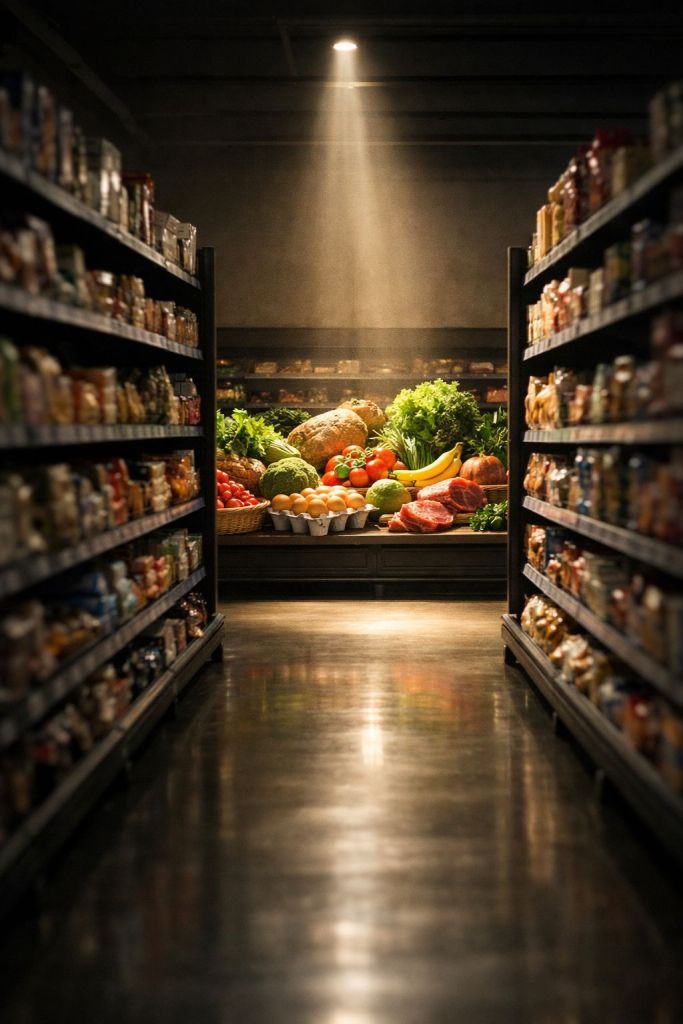
Investir em alimentação de verdade reduz gastos, mas também inaugura um movimento muito esperado: o entendimento de que grande parte das doenças começa pela boca. Pela escolha no supermercado. Pela decisão diária do que vai ao prato.
É por isso que eu precisei escrever este texto agora. Porque mais do que uma mudança de guia, o que se anuncia é uma mudança de narrativa. E registrar esse momento, para mim, é tão importante quanto criticá-lo, acompanhá-lo e questionar o que vem depois.
Fiquei um tempo fora…
I’ve been away for a while.
But some events demand presence.
I go through long periods without writing here. Not for lack of topics, but because I only publish when something truly needs to be said. And this time, I had to show up. What happened recently directly touches everything I have been studying, observing, and questioning for years about food, health, and industry. This text is less an opinion and more a record.
The Brazilian Dietary Guidelines: when guidance fails to become a system
I have studied the Brazilian Dietary Guidelines. I know their proposal, their foundations, and their historical importance. Still, more than ten years after their publication, one question is unavoidable: why do we keep facing the same nutritional problems?
This reflection does not invalidate the Guidelines. On the contrary, it arises precisely from recognizing that they are an advanced document — but an isolated one.
Ten years is too long for a dietary guideline
The Brazilian Dietary Guidelines were released in 2014. Today, more than ten years have passed. In terms of social dynamics, consumption patterns, marketing strategies, and the food industry, that is a very long time.
During this period, consumption habits have changed, ultra-processed foods have become more sophisticated, communication has grown more aggressive and digital, and indicators of obesity, diabetes, and eating disorders have continued to rise.
This forces us to acknowledge an important fact: the Guidelines alone were not enough to change the population’s dietary landscape.
The problem is not the absence of guidance
There is a dietary guideline. It is clear, accessible, and well-founded. The problem is not a lack of technical information.
The problem is that guidance does not become reality when there is no system to support it. While the Guidelines recommend avoiding ultra-processed foods, the food environment encourages consumption, lowers prices, increases availability, and constantly promotes these products.
Technical discourse points in one direction, while everyday life pushes in another.
Legislation does not follow what was established as a rule
If the Guidelines were truly treated as a central public policy directive, we would see clear consequences: stricter advertising regulations, economic incentives for real food, and meaningful disincentives for ultra-processed products.
But this does not happen consistently. There is a structural disconnect between what is recommended and what is allowed. Legislation does not move in step with public health discourse — and this is the core of the problem.
Media influence continues to favor ultra-processed foods
Food marketing is omnipresent. It operates on desire, convenience, price, and promises of quick well-being. It is far more seductive than any institutional guideline.
Meanwhile, the Guidelines are not on supermarket shelves, not in advertisements, and not at the center of mass communication. In practice, the food environment teaches far more than any handbook.
The Guidelines became an academic reference, not a popular tool
Today, those who truly know the Brazilian Dietary Guidelines are nutritionists, students, and researchers. But those who decide what reaches people’s plates on a large scale are industry, retail, and advertising — actors that do not operate according to the Guidelines.
As a result, the document is respected and internationally cited, but its impact on everyday life remains limited.
There is no individual choice without a favorable environment
“Food choice” is often discussed, but this idea ignores context. When ultra-processed foods are cheaper, more accessible, more advertised, and more convenient, we are not talking about free choice, but about an environment that directs behavior.
Food education without transforming the environment is insufficient.
This is not an exclusively Brazilian problem
This scenario is not unique to Brazil. Many countries have guidelines, evidence, and scientific consensus, but lack political and economic confrontation.
Brazil was conceptually bold in proposing a classification based on the degree of food processing. Still, practice failed to follow discourse.
Conclusion
This text also exists for a very concrete reason.
On January 7, 2026, the United States made an official announcement that symbolizes a profound shift in how food has been treated over recent decades. The war against saturated fat comes to an end — at least at the institutional level. The demonization of protein also ends, as it now takes on a central role. A return to natural food is reaffirmed.
And perhaps most significantly, a direct confrontation with ultra-processed foods begins. The very products that, for many years, were protected by official guidelines and narratives designed to favor industry. For decades, it was industry that dictated what people would eat — and how they should understand health.
Today, the focus shifts. Not out of altruism, but out of necessity. Never before have there been so many preventable, chronic diseases directly linked to diet. Healthcare costs have become unsustainable, and the United States, as a strategic country, has recognized something basic: prevention is cheaper than treatment.
Investing in real food reduces costs, but it also initiates a long-awaited movement — the understanding that most diseases begin in the mouth. In the choices made at the supermarket. In what is placed on the plate every day.
That is why I needed to write this text now. Because more than a change in guidelines, what is being announced is a change in narrative. And documenting this moment, for me, is just as important as criticizing it, following it, and questioning what comes next.
Sim, eu sumi. Mais de um mês sem escrever por aqui. E, para ser sincera, eu até cheguei a esquecer do blog em alguns dias, não por falta de importância, mas porque a vida virou uma grande mudança. Literalmente.
Saí de um apartamento e vim para uma casa. E quem tem TDA (Transtorno de Déficit de Atenção) vai entender, mudanças não são apenas físicas. Não é só sobre caixas espalhadas, móveis fora do lugar ou rotina bagunçada. É sobre perder o eixo interno.
Meu cérebro funciona à base de rituais, meus horários, meus cantinhos, meu jeito específico de fazer as coisas. Quando tudo isso desaparece de uma vez, eu me sinto como se alguém tivesse apertado o botão de “embaralhar” dentro de mim. O que antes estava ao alcance da mão agora está dentro de uma caixa que eu não sei qual é. E essa desordem externa vira desordem interna, e não adianta romantizar, dói.
Mas apesar do caos, existe algo mais forte, a consciência.
Porque se tem uma coisa que eu venho aprendendo nessa jornada de autoconhecimento é a importância de saber como eu funciono. Quando eu trago luz para os meus padrões, para as minhas dificuldades e inclinações, eu me observo com mais lucidez. E essa lucidez me salva. Ela impede que eu confunda pausa com desistência.
Sim, eu parei. Mas eu voltei.
E voltar também é coragem.
Esse blog faz parte do meu processo. Ele é meu espaço de colocar pra fora meus pensamentos, angústias e deficiências, e quem sabe, um dia, isso possa ajudar alguém que esteja passando pelo mesmo. Eu poderia simplesmente ter deixado esse vazio virar abandono. Mas eu escolhi não fazer isso.
Porque eu não sou o erro, nem a distância, nem o deslize. Eu sou a constância que eu decido ter, mesmo que ela venha com tropeços, pausas e recomeços.
Então, se você que está lendo isso também parou, seja por um mês, dois ou mais, saiba, isso não é fracasso. Isso é humano. O importante não é quantas vezes você caiu, mas quantas vezes você escolhe levantar com o mesmo desejo de seguir adiante, mesmo sabendo que talvez vá cair de novo.
A jornada não é sobre perfeição. É sobre persistência.
E aqui estou eu, de volta. Feliz por ter voltado.
Que eu siga mais constante daqui pra frente, e que esse texto, de alguma forma, lembre você de que recomeçar também conta como vitória.
Deciding to Come Back Is Sometimes Braver Than Deciding to Leave
Yes, I disappeared. More than a month without writing here. And, to be honest, there were even days I forgot about the blog—not because it wasn’t important, but because life became a huge change. Literally.
I moved from an apartment to a house. And anyone with ADHD (Attention Deficit Hyperactivity Disorder) will understand: changes are not just physical. It’s not only about scattered boxes, furniture out of place, or a disrupted routine. It’s about losing your internal balance.
My brain runs on rituals—my schedules, my little corners, my very specific way of doing things. When all of that disappears at once, I feel like someone pressed the “shuffle” button inside me. What used to be within reach is now in a box I don’t even know. And this external chaos becomes internal chaos, and no amount of romanticizing it can change that—it hurts.
But despite the chaos, something stronger exists: awareness.
Because one thing I’ve been learning on this journey of self-knowledge is the importance of knowing how I function. When I shine a light on my patterns, my difficulties, and my inclinations, I observe myself with more clarity. And that clarity saves me. It prevents me from confusing a pause with giving up.
Yes, I paused. But I came back.
And coming back is also courage.
This blog is part of my process. It’s my space to release my thoughts, my anxieties, my weaknesses—and who knows, maybe one day it can help someone going through the same thing. I could have simply let this emptiness turn into abandonment. But I chose not to.
Because I am not my mistake, nor the distance, nor the slip. I am the consistency I choose to have, even if it comes with stumbles, pauses, and restarts.
So, if you reading this also paused—whether for a month, two months, or more—know that this is not failure. This is human. What matters is not how many times you fell, but how many times you choose to get up with the same desire to move forward, even knowing you might fall again.
The journey is not about perfection. It’s about persistence.
And here I am, back. Happy to be back.
May I stay more consistent from now on, and may this text, in some way, remind you that starting over also counts as a victory.
to be back.
May I stay more consistent from now on, and may this text, in some way, remind you that starting over also counts as a victory.
Acordar de manhã e se deparar com um dia cheio de compromissos é tipo um teste de resistência: faculdade, treino, trabalho, tarefas de casa e ainda aquelas demandas que surgem do nada. A grande pergunta surge: será que existe um estilo que sirva para tudo isso sem me transformar numa criatura mitológica de mil braços? A tal “estilo universal” parece mágica… mas, spoiler, ele nunca vai resolver tudo sozinho.
Hoje, temos uma gama enorme de lugares para frequentar, e cada um com seu dress code. Não dá para ir de terno para a academia sem levar uma roupa de treino, nem de roupa de academia para um evento espiritual. Cada contexto pede algo diferente, e o desafio é encontrar um meio termo que funcione para a maioria das nossas demandas diárias, sem perder coerência com quem somos.
Às vezes a gente espera que um estilo seja tipo superpoder: da academia à faculdade, passando por reuniões, mercado e tarefas domésticas. Spoiler 2: não é. O estilo só acompanha quem já está se organizando — ou tentando não se perder no caos da vida.
No meu caso, como designer de moda, o desafio é duplo: ser prática sem perder estilo. Antes, minhas roupas eram pensadas para agradar, esconder ou seguir expectativas. Agora, busco um estilo que funcione para treinar, estudar, trabalhar e ainda me faça sentir bonita — porque vamos combinar, ninguém quer parecer que saiu de um episódio de reality de “quem não dormiu nada”. Encontrar esse equilíbrio é quase uma ciência: estética, conforto, praticidade e coerência pessoal… tudo na mesma equação maluca.
E a realidade? Nem sempre rola aquele planejamento do dia anterior. Você chega exausta, com mil coisas para fazer, e acaba desligando. Minha estratégia foi criar mini-rituais: lavo e seco o cabelo no dia anterior, já penso no estilo do look e deixo maquiagem e penteado prontos para um futuro imaginário (ou um sábado mais tranquilo). Isso facilita minha rotina e enfraquece o argumento da preguiça — principalmente quando se trata da academia. Estando próxima da organização e com o estilo definido, diminui bastante a chance de faltar ou adiar o treino, que é o compromisso mais negligenciado na maioria das rotinas.
Para mim, o que funciona hoje é algo muito prático: uma calça da Adidas, combinada com um tênis casual e um blazer ou uma camisa social. Por baixo, estou de top ou t-shirt. Quando é dia de treino de perna, preciso de mais mobilidade, então coloco uma legging, uma t-shirt bacana e uma jaqueta estilosa, pronta para cumprir meus compromissos de forma funcional. Graças à praticidade e à aceitação atual do look esportivo no dia a dia — algo que já discutimos no post sobre wellness — é totalmente possível fazer essa ponte entre estética e funcionalidade.
Hoje, você consegue transitar entre alfaiataria e peças esportivas com um high low bem pensado, sem precisar carregar mil roupas extras. Já usei vestido com short de treino por baixo e tênis, levando uma t-shirt guardadinha na bolsa. Cheguei na academia, troquei o vestido pela t-shirt e treinei sem perder tempo. Essas combinações pensadas antes ajudam a dar conta de tudo — e essa é a sensação que quero compartilhar. Você também pode experimentar e descobrir seu próprio jeito de equilibrar estilo, funcionalidade e rotina.
O que aprendi nessa transição é que não existe estilo mágico. Mas existe algo melhor: quando você se organiza por dentro, o estilo acompanha. A escolha do look certo não resolve tudo sozinho, mas reflete como você cuida de si mesma, do seu tempo e da sua rotina. No fim das contas, o estilo deixa de ser inimigo ou vilão e passa a ser aliado da vida real, com direito a conforto, coerência e aquele toque de “eu consigo sim, mesmo depois de dormir só três horas”.
A style for everything: does it exist?
Good morning, ultimate creaminess!
Waking up in the morning and facing a day full of commitments is like a test of endurance: college, gym, work, household chores, and those unexpected tasks that pop up out of nowhere. The big question arises: is there a style that works for all of this without turning me into a mythical creature with a thousand arms? That “universal style” seems magical… but spoiler: it will never solve everything on its own.
Today, we have a huge range of places to attend, each with its own dress code. You can’t go to the gym in a suit without bringing workout clothes, nor go from gym clothes to a spiritual event. Each context requires something different, and the challenge is to find a middle ground that works for most of our daily demands, without losing coherence with who we are.
Sometimes we expect a style to be like a superpower: from the gym to college, through meetings, the supermarket, and household tasks. Spoiler 2: it’s not. Style only follows those who are already organizing themselves—or trying not to get lost in the chaos of life.
In my case, as a fashion designer, the challenge is double: being practical without losing style. Before, my clothes were designed to please, hide, or follow expectations. Now, I look for a style that works for training, studying, working, and still makes me feel beautiful—because let’s be honest, no one wants to look like they just came out of a “who didn’t sleep at all” reality show episode. Finding this balance is almost a science: aesthetics, comfort, practicality, and personal coherence… all in the same crazy equation.
And the reality? That planning the night before doesn’t always happen. You arrive exhausted, with a thousand things to do, and end up zoning out. My strategy was to create mini-rituals: wash and dry my hair the day before, already think about the style of the outfit, and leave makeup and hair ready for some imaginary future (or a more relaxed Saturday). This makes my routine easier and weakens the laziness argument—especially when it comes to the gym. Being close to organized and having my style defined greatly reduces the chance of skipping or postponing training, which is the most neglected commitment in most routines.
For me, what works today is something very practical: Adidas pants, combined with casual sneakers and a blazer or a shirt. Underneath, I’m wearing a top or t-shirt. When it’s leg day at the gym, I need more mobility, so I put on leggings, a cool t-shirt, and a stylish jacket, ready to handle my commitments functionally. Thanks to practicality and today’s acceptance of sporty looks in daily life—which we already discussed in the wellness post—it’s totally possible to bridge aesthetics and functionality.
Today, you can move between tailoring and sporty pieces with a well-thought-out high-low look, without having to carry a thousand extra clothes. I’ve worn a dress with workout shorts underneath and sneakers, carrying a spare t-shirt in my bag. Arrived at the gym, swapped the dress for the t-shirt, and trained without wasting time. These pre-planned combinations help manage everything—and that’s the feeling I want to share. You can also experiment and find your own way to balance style, functionality, and routine.
What I learned in this transition is that there’s no magical style. But there’s something better: when you organize yourself internally, style follows. Choosing the right outfit doesn’t solve everything alone, but it reflects how you take care of yourself, your time, and your routine. At the end of the day, style stops being an enemy or villain and becomes an ally of real life, with comfort, coherence, and that touch of “I totally can do this, even after sleeping only three hours.”
Bom diaaaaaa, puro creme do amor! Acordei pensando numa palavrinha que está na boca do mundo: wellness. Todo lugar que você olha, ela está lá. Só que, pra muita gente, wellness virou sinônimo apenas de vida fitness — academia, roupa de treino, suplementação. Mas, olha… não é bem assim.
Na verdade, o wellness é um conceito mais amplo. Ele não fala só sobre o corpo: ele fala sobre a gente como um todo. Corpo, mente, alma, rotina, alimentação, emoções, autoconhecimento… tudo isso junto. É quase como um quebra-cabeça: se uma peça não está encaixada, cedo ou tarde o resto perde equilíbrio.
Depois da pandemia, o termo se popularizou porque todo mundo começou a buscar mais qualidade de vida. Mas aí veio o ruído: a propaganda vende só o músculo, a pele perfeita e a garrafinha de água estilosa. E eu não tenho nada contra essas coisas, mas wellness de verdade vai além do que a gente vê no espelho. É sobre longevidade — não só do corpo, mas da essência. É sobre estar bem para viver, não apenas para postar.
E é aí que entra o Exímia Você. Porque aqui a gente fala dessa interseção: cuidar do externo, sim, mas sem esquecer que o interno sustenta tudo. Não dá pra ser sucesso por fora e estar em ruínas por dentro. Não dá pra correr maratona se a cabeça está implorando por descanso.
Wellness é o conjunto que te mantém viva, inteira e autêntica. É a roupa que você veste, mas também o jeito que você fala com você mesma. É o que você coloca no prato e o que você tira da mente. É presença, é escolha, é cuidado.
Quando eu falo que um conjunto de coisas está relacionado ao bem-estar, é porque cada um vai determinar o seu conjunto de coisas. Para alguns é autoconhecimento, para outros é Deus, para uns falta um degrau — o do relacionamento, o da carreira… Todos esses pratinhos da nossa vida precisam ser olhados com atenção. Claro que a gente não vai atingir o ápice em um ano, porque existem fatores fora do nosso controle. Mas é essencial definir qual é o seu conjunto de coisas inerentes ao bem-estar — seja o bem da sua família, o equilíbrio psíquico, emocional e físico, ou a realização profissional e afetiva. Não confunda com metas: são termômetros internos que já existem em nós. E, para isso, o autoconhecimento é imprescindível. Ele mostra as armadilhas nas quais a gente costuma cair, as inclinações da nossa mente e para onde ela nos puxa. O wellness, para mim, é acima de tudo um bem-estar de todas as camadas: corpo, mente e essência. É um olhar maduro e presente — não projetado no futuro ou preso no passado. É perceber como você caminha pela vida hoje, apesar das circunstâncias, e buscar escolhas e atitudes que sustentem uma vida mais equilibrada, com menos estresse e mais contemplação do que já se tem.
E aí? Como anda o seu wellness hoje?
— VERSÃO EM INGLÊS —
Goooood morning, pure cream of love! I woke up thinking about a little word that’s on everyone’s lips: wellness. Everywhere you look, it’s there. But for many people, wellness has become just a synonym for fitness life — gym, workout clothes, supplements. But honestly… that’s not quite it.
In fact, wellness is a much broader concept. It’s not just about the body: it’s about us as a whole. Body, mind, soul, routine, nutrition, emotions, self-knowledge… all of it together. It’s almost like a puzzle: if one piece isn’t in place, sooner or later the rest loses balance.
After the pandemic, the term became popular because everyone started searching for more quality of life. But then came the noise: advertising sells only the muscle, the perfect skin, the stylish water bottle. And I have nothing against those things, but real wellness goes beyond what we see in the mirror. It’s about longevity — not just of the body, but of the essence. It’s about being well to live, not just to post.
And that’s where Exímia Você comes in. Because here we talk about this intersection: taking care of the outside, yes, but without forgetting that the inside sustains everything. You can’t be a success on the outside while falling apart on the inside. You can’t run a marathon if your mind is begging for rest.
Wellness is the set of things that keeps you alive, whole, and authentic. It’s the clothes you wear, but also the way you talk to yourself. It’s what you put on your plate and what you take out of your mind. It’s presence, it’s choice, it’s care.
When I say that a set of things is related to well-being, it’s because each person will determine their own set. For some it’s self-knowledge, for others it’s God, for some it’s a missing step — the relationship step, the career step… All these plates we juggle in life need to be looked at carefully. Of course, we won’t reach the peak in just one year, because there are factors beyond our control. But it’s essential to define what is in your personal set of things that are inherent to well-being — whether it’s your family’s welfare, mental, emotional and physical balance, or professional and emotional fulfillment. Don’t confuse it with goals: they are internal thermometers that already exist in us. And for that, self-knowledge is essential. It shows the traps we tend to fall into, the inclinations of our mind, and where it pulls us. For me, wellness is, above all, the well-being of all layers: body, mind, and essence. It’s a mature and present look — not projected into the future or stuck in the past. It’s noticing how you walk through life today, despite the circumstances, and seeking choices and attitudes that sustain a more balanced life, with less stress and more appreciation for what you already have.
Aos 45 anos, comecei a perceber mudanças no meu corpo que não estavam mais sob meu controle. Marcadores nos exames subindo, perda de peso cada vez mais difícil, deficiências nutricionais aparecendo, e uma sensação de que algo precisava ser feito. E foi aí que eu tomei uma decisão: tentar transformar esses resultados — sem o auxílio de medicamentos.
Não porque eu sou contra remédio. Pelo contrário. As medicações sempre me ajudaram muito, principalmente no controle da compulsão e até na regulação dos sintomas do TDAH. Elas funcionavam. Só que o problema é que eu só funcionava com elas. Quando o efeito passava, tudo voltava ao “modo antigo”. E isso começou a me incomodar profundamente.
A verdade é que eu me sentia emprestada de mim mesma. Equilibrada, sim, mas por um tempo. Depois, voltava tudo: os hábitos, os gatilhos, os padrões. Principalmente o vício em açúcar — que, pra mim, é um vício real. Afetivo. Emocional. Psicológico. Patológico. E absolutamente desafiador de vencer.
Não adianta tratar como se fosse apenas uma questão de “força de vontade”. Isso me incomoda muito. Todo mundo que entende que precisa mudar e decide fazer algo por si já está usando sua força de vontade. Mas nem sempre isso é suficiente. Existe o fator químico, o fator inconsciente, o funcionamento automático do cérebro. Algumas ações são tão enraizadas que acontecem sem que a gente perceba. São quase como respirar. E quando você se dá conta, já aconteceu.
Então não, não é “falta de vergonha na cara”. Não é preguiça. É complexo. É profundo. É um trabalho de autoconhecimento e vigilância constante. De estar desperta. Consciente. Presente. E mesmo assim… nem sempre dá certo. Mas quando dá, é transformador.
Esse é o meu processo. Um processo em que eu decidi que, desta vez, sou eu por mim. Sem amparo químico, sem atalhos. Sou eu encarando essa batalha no front. E não é fácil. Mas eu tive pequenas vitórias que me mantêm firme. A mais marcante delas: minha insulina, que estava em 27, caiu para 6. Isso, pra mim, foi um sinal de que o caminho que escolhi, por mais duro que seja, tem valor.
Essas conquistas não aconteceram por acaso. Eu desenvolvi estratégias. Algumas funcionaram muito bem, outras eu descartei. Anotei todas. Estudei. Me observei. Testei. E isso tem feito toda a diferença — tanto para o TDAH quanto para a relação com o açúcar, com o corpo, com os exames, com a estética, com a saúde como um todo.
Aliás, foi esse processo que me despertou a vontade de cursar Nutrição. Eu quero entender mais a fundo esse combustível que colocamos no corpo. Quero aplicar isso na minha vida e, quem sabe, na vida de outras pessoas também.
E se você quer entender o nível do meu vício, eu sou a pessoa capaz de não comer só uma fatia de torta. Eu como a torta inteira. De uma vez só. Isso não é fome. Isso é dependência. É compulsão. É descontrole. E é por isso que eu preciso vencer.
Se você está nessa também, saiba que você não está sozinha. Isso não é simples. Mas com informação, autoconhecimento, autocontrole e autocuidado… mesmo devagar, dá pra mudar.
Eu ainda não cheguei onde quero. Mas eu acredito que é possível.
E sigo.
🇧🇷 | 🇺🇸
When I Decided to Change My Health Markers Without Medication: A Real Battle Against an Invisible Addiction
When I Decided to Change My Health Markers Without Medication: A Real Battle Against an Invisible Addiction At 45, I began to notice changes in my body that were no longer under my control. Rising health markers, weight loss becoming increasingly difficult, nutritional deficiencies emerging, and a sense that something had to be done. That’s when I made a decision: to try to transform those results—without the help of medication. Not because I’m against medication. Quite the opposite. Medications have always helped me a lot, especially in managing compulsive behavior and even regulating ADHD symptoms. They worked. The problem was that I only functioned with them. When their effects wore off, everything reverted to the “old way.” And that started to bother me deeply. The truth is, I felt like I was borrowing myself. Balanced, yes, but only temporarily. Then everything came back: the habits, the triggers, the patterns. Especially the addiction to sugar—which, for me, is a real addiction. Emotional. Psychological. Pathological. And absolutely challenging to overcome. It’s not enough to treat it as just a matter of “willpower.” That really bothers me. Everyone who realizes they need to change and decides to do something for themselves is already using their willpower. But sometimes, that’s not enough. There’s the chemical factor, the unconscious factor, the automatic functioning of the brain. Some actions are so ingrained that they happen without us noticing. They’re almost like breathing. And when you realize it, it’s already done. So no, it’s not a “lack of shame.” It’s not laziness. It’s complex. It’s deep. It’s a journey of self-awareness and constant vigilance. Of being awake. Conscious. Present. And even then… it doesn’t always work out. But when it does, it’s transformative. This is my process. A process where I decided that, this time, it’s me for myself. No chemical crutches, no shortcuts. It’s me facing this battle head-on. And it’s not easy. But I’ve had small victories that keep me steadfast. The most significant one: my insulin, which was at 27, dropped to 6. For me, that was a sign that the path I chose, as tough as it is, is worthwhile. These achievements didn’t happen by chance. I developed strategies. Some worked really well; others I discarded. I wrote everything down. I studied. I observed myself. I tested. And that has made all the difference—for my ADHD, my relationship with sugar, my body, my health markers, my appearance, and my overall health. In fact, it was this process that sparked my desire to study Nutrition. I want to understand more deeply the fuel we put into our bodies. I want to apply this to my life and, who knows, maybe to other people’s lives too. And if you want to understand the extent of my addiction, I’m the kind of person who can’t just eat one slice of pie. I eat the whole pie. All at once. That’s not hunger. That’s dependency. It’s compulsion. It’s a lack of control. And that’s why I need to overcome it. If you’re in this too, know that you’re not alone. It’s not simple. But with information, self-awareness, self-control, and self-care… even slowly, change is possible. I haven’t yet reached where I want to be. But I believe it’s possible. And I keep going.
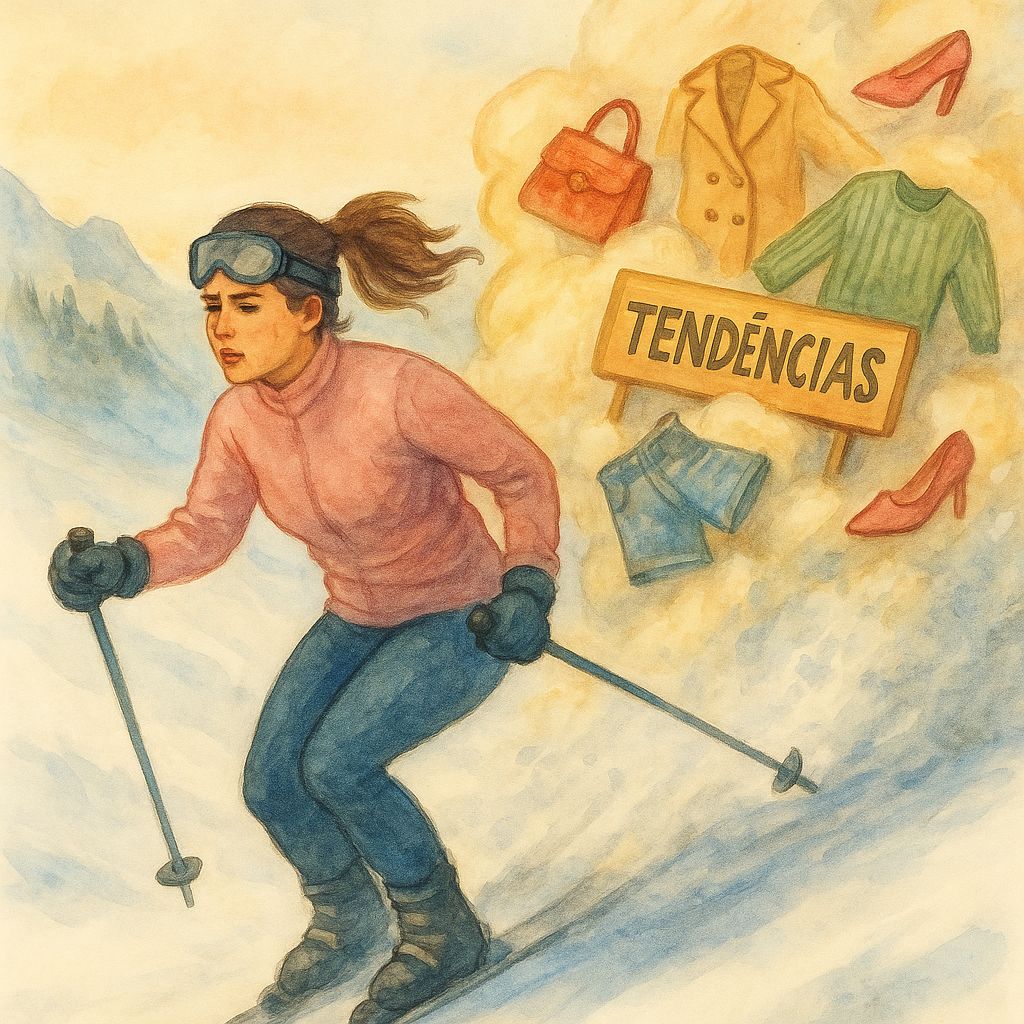
Dizem que quem trabalha com moda tem que saber de todas as tendências. E talvez até tenha. Mas vou te contar uma coisa: eu não aguento mais modinha.
Falo isso com o coração tranquilo, com a mente crítica e com a formação de quem estudou moda. Não é ranço de consumidora. É exaustão de designer.
Porque pra mim, a moda perdeu um pouco o sentido. Ela era uma linguagem. Hoje, virou um script. Antes, ela ajudava a comunicar quem você era. Agora, ela te obriga a copiar o que já está sendo dito por alguém. E quase sempre, esse alguém está vendendo alguma coisa.
Você já reparou como as tendências nascem em avalanche? Um dia é a calça tal. No outro, é o top assim. Depois, a sandália assado. E se você não acompanha, parece que ficou desatualizada, fora de sintonia, quase um erro de percurso. Mas… será mesmo?
Esse ciclo infinito de novidades cria uma urgência que não é sua. É das marcas. É da publicidade. É da necessidade de vender. E quanto mais você compra, mais parece que precisa comprar. A modinha vira um poço sem fundo. Uma falsa solução pra uma insegurança que talvez nem fosse sua.
E sabe qual é o problema disso tudo? É que você começa a se vestir como todo mundo — mesmo sendo única. Você se molda à tendência, quando a tendência deveria se moldar a você.
Tem dias que eu vejo uma sequência de vídeos com meninas falando “tendência que você precisa ter”, “o que está em alta”, “o que não dá mais pra usar”… e me bate uma preguiça. Não das meninas, mas do sistema que criou essa ansiedade.
Se você quer usar o que está na moda porque ama aquilo, se sente linda, se reconhece — vai com tudo! Agora, se está usando só porque te disseram que “tem que usar”, respira. Você não tem que nada.
E aqui vai o ponto de virada: o papel do designer de moda, do stylist, do consultor de imagem, do visagista — é justamente o oposto de empurrar tendência.
É entender o que você quer comunicar. O que você sente. Como seu corpo se expressa. Que mensagem você precisa passar no trabalho, na entrevista, no julgamento, no palco, no altar.
Moda é comunicação. Moda é ferramenta estratégica. Moda é linguagem. E linguagem serve para conectar, não para segregar.
Se você só copia a influencer da vez, você não está se comunicando — você está sendo dublada. Ela ganhou a roupa. Ela foi vestida pela marca. Você, não. E se você quer se vestir com intenção, com clareza, com propósito… a tendência talvez seja o que menos importa.
Hoje eu me visto para comunicar a mulher que eu sou, a vida que eu tenho e a rotina que eu enfrento. Minha roupa não é mais um look bonito. É uma ferramenta. É minha aliada. (Farei um post sobre essa transição de estilo.)
ENGLISH VERSION BELOW
Too Much Trendiness Drains Me When the avalanche of trends runs over the purpose of fashion
They say that if you work in fashion, you have to know every trend. And maybe that’s true. But let me tell you something: I’m done with trendy stuff.
I say this with a calm heart, a critical mind, and the training of someone who studied fashion. It’s not consumer fatigue — it’s designer exhaustion.
Because for me, fashion has lost a bit of its meaning. It used to be a language. Now it’s a script. Before, it helped express who you were. Now it forces you to copy what someone else is already saying. And most of the time, that someone is selling something.
Have you noticed how trends come in avalanches? One day it’s a certain style of jeans. The next, it’s a specific top. Then, a must-have pair of shoes. And if you’re not keeping up, it feels like you’re outdated, out of sync — almost a fashion glitch. But… is that really true?
This endless cycle of newness creates a sense of urgency that isn’t yours. It belongs to the brands. To advertising. To the need to sell. And the more you buy, the more you feel like you need to buy. Trendiness becomes a bottomless pit. A fake solution for an insecurity that maybe wasn’t even yours.
And here’s the problem: you start dressing like everyone else — even though you’re unique. You shape yourself to the trend, when the trend should shape itself to you.
Some days I see a string of videos with girls saying “you need this trend,” “what’s hot right now,” “what you can’t wear anymore”… and I feel tired. Not of them — but of the system that created this anxiety.
If you wear what’s trending because you love it, because you feel amazing, because you recognize yourself in it — go for it! But if you’re only wearing it because someone told you “you have to,” take a breath. You don’t have to do anything.
And here’s the turning point: the role of a fashion designer, a stylist, an image consultant, a visagist — is the exact opposite of pushing trends.
It’s about understanding what you want to communicate. What you feel. How your body expresses itself. What message you need to convey — at work, in an interview, in court, on stage, or at the altar.
Fashion is communication. Fashion is a strategic tool. Fashion is a language. And language is meant to connect — not to exclude.
If you’re just copying the latest influencer, you’re not communicating — you’re being dubbed. She got the outfit for free. She was dressed by the brand. You weren’t. And if you want to dress with intention, with clarity, with purpose… the trend might be the least important thing.
Today, I dress to communicate the woman I am, the life I live, and the routine I face. My clothes are no longer just pretty outfits. They’re a tool. They’re my ally. (I’ll share more about this style transition in a future post.)
Você já acordou com o planner todo bonitinho, coloridinho, cheio de metas, e de repente… pá: a gangorra hormonal te dá uma rasteira antes mesmo do almoço? Pois é, bem-vinda ao clube das mulheres que vivem tentando conciliar rotina, produtividade, hormônios e um corpo que tem vida própria.
Ontem era dia de treino de perna. Sim, aquele dia que a gente precisa estar em modo guerreira, porque a missão é pesada. Mas quem disse que a gangorra hormonal respeita planner? Por volta das 11h, a enxaqueca pós-menstruação chegou sem bater na porta, e a minha semana de produtividade começou a parecer ficção científica. Não dava pra abrir o olho, nem pra pensar em agachar com 50kg nas costas.
Primeira tentativa de salvar o dia: remédio. Segunda tentativa: coloquei meu fone e botei pra tocar aquelas ondas binaurais milagrosas do YouTube, prometendo curar a enxaqueca em minutos. Porque nessas horas, amiga, se disserem que um som alienígena vai resolver, eu dou play sem pensar duas vezes. Terceira tentativa: procurar “cura para enxaqueca hormonal” no YouTube enquanto eu andava pela casa tentando fingir que o dia não estava indo por água abaixo. Resultado? Comprei um frasco de vitaminas indicado por um médico aleatório, porque nessas horas o cartão de crédito também entra pra salvar o dia.
Mas a culpa? Ah, essa é pontual, não atrasa nunca. O planner me olhava da mesa, gritando “meta não batida, fracasso à vista!”. (Além de geminiana, eu tenho TDAH, diagnosticada ainda na infância. Por isso essas metas e rotinas têm um peso especial pra mim. Cada check que eu dou no planner é quase um ato de vitória. Quem tem TDAH sabe: a mente larga mil abas abertas ao mesmo tempo, e as frustrações por não dar conta de tudo são frequentes. Vou falar mais sobre isso em breve, porque é um assunto importante e muito verdadeiro pra mim – e um dos motivos que me fizeram protelar alguns projetos ao longo da vida.)
Então levantei, coloquei a roupa de treino – só Deus sabe como – e fui pra academia. Minha disposição ficou deitada na cama, me mandando áudio de “boa sorte, amiga”.
Cheguei lá, encarei o espelho. Parecia que meu próprio corpo estava me olhando nos olhos e dizendo: “Filha, pega leve hoje, ou quem vai te pegar é a ambulância.” Resultado? Treino de 30 min no transport (elíptico), só pra alimentar a mente com aquele check simbólico, sem ignorar o corpo que gritava por calma.
E olha, se a vida me desse 30 segundos pra escolher entre: • Aquele look da Adidas que eu tô namorando no site, todo hype, • Ou disposição, ânimo e bem-estar pra treinar bem, sem sentir dor, com saúde… mesmo que fosse com a roupinha de treino mais fuleirinha do meu armário, eu escolheria a segunda opção sem pensar duas vezes. Porque não adianta ter o look perfeito se você não tem energia pra viver dentro dele.
No fim do dia, o planner ficou com uns 400 itens pra amanhã, mas quer saber? Eu fiz o que deu. A mulher é malabarista, equilibra pratinhos invisíveis, hormônios, metas, casa, trabalho, tudo ao mesmo tempo. Ontem, eu dei um passo pequeno, mas dei. Tijolinho por tijolinho, sem me quebrar pra agradar minha própria planilha mental.
Resolvi compartilhar isso porque sei que a gente vive se cobrando demais, tentando cumprir tudo o que tá no planner, mesmo quando o corpo tá implorando por descanso. E não, isso não é preguiça, é inteligência emocional. Se você também tá nessa gangorra, entre metas e hormônios, saiba que não tá sozinha. A auto-compaixão é tão importante quanto disciplina. E lembre-se: o limite de uma, não é o limite da outra. A produtividade de uma não é igual à da outra. Cada corpo é um universo, com seu próprio tempo, sua própria velocidade, seus próprios limites. Encontre o seu e viva em paz.
— VERSÃO EM INGLÊS —
Post – “Planner vs Hormones: when the hormonal seesaw knocks down even leg day”
Have you ever woken up with your planner all neat, colorful, full of goals, and suddenly… bam: the hormonal seesaw knocks you down before lunchtime? Welcome to the club of women constantly trying to juggle routine, productivity, hormones, and a body that has a life of its own.
Yesterday was supposed to be leg day. Yes, that day when we need to be in warrior mode because the mission is heavy. But who said the hormonal seesaw respects a planner? Around 11 a.m., post-menstrual migraine showed up uninvited, and my week of productivity started looking like science fiction. I couldn’t even open my eyes, let alone think about squatting with 50kg on my back.
First attempt to save the day: medicine. Second attempt: popped in my earbuds and played those miraculous binaural beats on YouTube, promising to cure migraines in minutes. Because at times like these, girl, if someone says alien sounds will help, I’ll hit play without thinking twice. Third attempt: searched for “hormonal migraine cure” on YouTube while wandering around pretending the day wasn’t falling apart. End result? Bought a bottle of vitamins recommended by some random doctor because, honestly, my credit card also tries to save the day.
But guilt? Oh, she’s always punctual, never late. My planner stared at me from the desk, screaming “goal not met, failure ahead!”. (I’m a Gemini, and I have ADHD, diagnosed in childhood. That’s why these goals and routines carry a special weight for me. Every checkmark on the planner feels like a victory. Anyone with ADHD knows: the mind leaves a thousand tabs open at once, and the frustration of not keeping up is frequent. I’ll talk more about this soon, because it’s an important and very real topic for me – and one of the reasons I’ve postponed some projects throughout life.)
So I got up, threw on my workout clothes – God knows how – and dragged myself to the gym. My motivation stayed in bed, sending me “good luck” voice notes.
I got there, looked in the mirror. It felt like my body was staring back, saying: “Girl, take it easy today, or the ambulance will take you instead.” End result? 30 min on the transport (elliptical), just to feed my mind with that symbolic checkmark, without ignoring the body begging for calm.
And look, if life gave me 30 seconds to choose between: • That Adidas look I’ve been eyeing on the website, all hype, • Or energy, willingness, and well-being to train properly, without pain, with health… even if it meant wearing the most raggedy workout outfit I own, I’d pick the second option without thinking twice. Because what’s the point of having the perfect look if you don’t have energy to live in it?
At the end of the day, the planner had about 400 tasks left for tomorrow, but you know what? I did what I could. Women are jugglers, balancing invisible plates, hormones, goals, house, work, everything at once. Yesterday, I took a small step, but I took it. Brick by brick, without breaking myself just to please my mental spreadsheet.
I’m sharing this because I know we pressure ourselves too much, trying to tick every box in the planner even when our body is begging for rest. And no, that’s not laziness, that’s emotional intelligence. If you’re also on this seesaw between goals and hormones, know that you’re not alone. Self-compassion is just as important as discipline. And remember: one person’s limit is not another’s. Productivity is not one-size-fits-all. Every body is a universe, with its own time, speed, and limits. Find yours and live in peace.
Já parou pra pensar nisso? Sabe aquela roupa que você veste e se sente poderosa, bonita, gostosa, magnética? Aquela peça que te levanta o astral só de olhar no espelho? Então, segura esse pensamento aí — porque ele é só o começo.
Durante um tempo, eu fiz exatamente isso: me escondia atrás de roupas lindas, caras, estilosas. Roupa era meu escudo. Roupas que maquiavam o que eu queria evitar: minha barriguinha saliente, a celulitezinha aparecendo, a flacidez gritando “oi” no espelho. E eu dizia pra mim mesma: “tá tudo bem, é só um vestido largo, tá tudo certo”.
Mas aí veio o teste. E olha… o teste vem sonso. Disfarçado de boy lindo, de praia, de biquíni. Vem com cara de romance, de convite pra viajar, de “vamos tomar um solzinho?”. Só que, na real? Não é sobre ele. É o seu interior te sacudindo. É a sua alma te jogando na parede e dizendo: “se toca, mulher!” Porque o teste não é o boy, não é a praia, não é o biquíni — é você com você.
No meu caso, conheci um cara. Bonito. Sarado. Viajado. Praia era o segundo sobrenome dele. E eu? Três passos atrás, fugindo de short, rezando pra ele não marcar rolê na areia. Ele até podia me aceitar como eu era. Mas eu não tava me aceitando. Eu sabia que ia chegar o momento de me despir — não só das roupas, mas das desculpas.
Foi aí que comecei a mudar meus hábitos. Não pra ele. Pra mim. E olha, não é sobre ficar fitness nível Panicat (nota de rodapé: Panicat era o apelido das meninas do programa Pânico na TV, conhecidas pelos corpos esculturais e bronzeados). Eu não tenho silicone, não tenho lipo, tenho celulite no quadril e uma barriguinha que insiste em não sumir.
Mas hoje? Eu ando de calcinha e sutiã pela casa me sentindo gostosa. Mesmo com 8 quilos acima do peso “ideal” (esse termo problemático que a gente já discute no próximo post). Porque eu me cuido. Treino. Como melhor (e evito a quadrilha: pão francês, refrigerante, açúcar e industrializados — que vamos esmiuçar depois, tá?).
Entendi que a minha primeira roupa é meu corpo. A pele, o músculo, o brilho no olho. Não adianta enfiar uma calça cara e ignorar o que tá gritando por dentro. E não é sobre estética padrão, é sobre segurança emocional, é sobre se olhar nua no espelho e dizer:
“PQP, que gata.”
Se você consegue fazer isso com 5, 10 quilos a mais, sem silicone, com estrias, celulite e tudo mais — é isso. Você venceu.
E se não consegue ainda, calma. Fica comigo. Não sai correndo, não. A gente vai chegar lá. Juntas. Se precisar rir, a gente ri. Se der raiva, xinga junto. Mas vai, porque, minha filha…
O seu corpo, as suas curvas, tudo que tem em você, que nasceu contigo, tem que ser a sua roupa mais importante.
A partir disso, fica muito mais fácil. Só experimenta.
— VERSÃO EM INGLÊS —
If you know which outfit makes you feel the most beautiful…
Have you ever stopped to think about that? You know that outfit that makes you feel powerful, beautiful, sexy, magnetic? That piece that lifts your spirits just by looking in the mirror? So, hold on to that thought — because it’s just the beginning.
For a while, I did exactly that: hid behind beautiful, expensive, stylish clothes. Clothes were my shield. Clothes that covered up what I wanted to avoid: my little belly sticking out, the cellulite showing, the flabbiness screaming “hello” in the mirror. And I’d tell myself: “it’s fine, it’s just a loose dress, all good.”
But then came the test. And look… the test comes sneaky. Dressed up as a hot guy, a beach, a bikini. It comes looking like romance, like an invitation to travel, like “let’s get some sun?” But in reality? It’s not about him. It’s your inner self shaking you up. It’s your soul pinning you to the wall and saying: “wake up, woman!” Because the test is not the guy, not the beach, not the bikini — it’s you with you.
In my case, I met a guy. Handsome. Ripped. Well-traveled. Beach was basically his middle name. And me? Three steps behind, dodging shorts, praying he wouldn’t plan a date at the beach. He might’ve accepted me the way I was. But I wasn’t accepting myself. I knew the moment would come — to strip off not just the clothes, but the excuses.
That’s when I started to change my habits. Not for him. For me. And look, it’s not about getting Panicat-level fit (footnote: Panicat was the nickname for the girls from the TV show Pânico na TV, known for their sculpted, tanned bodies). I don’t have implants, I haven’t had lipo, I have cellulite on my hips and a belly that insists on hanging around.
But today? I walk around the house in panties and a bra feeling hot. Even with 8 kilos above the “ideal” weight (that problematic term we’ll get into in the next post). Because I take care of myself. I work out. I eat better (and I avoid the gang: French bread, soda, sugar, and processed foods — we’ll break that crew down later, okay?).
I realized my first outfit is my body. The skin, the muscle, the sparkle in my eyes. No point stuffing yourself into expensive pants and ignoring what’s screaming on the inside. And it’s not about standard beauty — it’s about emotional security, it’s about looking at yourself naked in the mirror and saying:
“Damn, girl.”
If you can do that with 5, 10 extra kilos, no implants, with stretch marks, cellulite and all — that’s it. You’ve made it.
And if you can’t do that yet, hold on. Stick with me. Don’t run away. We’ll get there. Together. If you need to laugh, we’ll laugh. If you get mad, let’s curse together. But keep going, because, girl…
Your body, your curves, everything you were born with — that has to be your most important outfit.
From there on, everything gets easier. Just try it.





 Exímia Você - Bonita por dentro e por fora